
National Hunt Trifecta: Jump Racing Strategies
 Available in US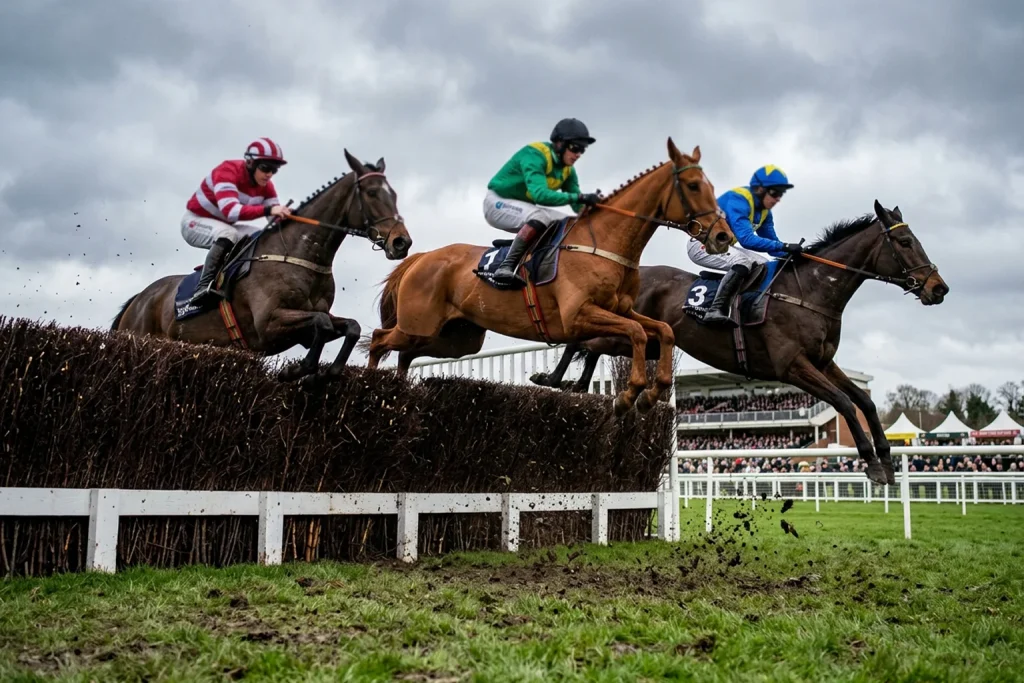
Over the Obstacles
National Hunt trifecta betting presents unique challenges and opportunities distinct from flat racing. Jump racing’s additional variables—stamina demands, jumping ability, fall risk, and ground sensitivity—create complexity that affects finishing order prediction. Understanding these factors improves trifecta construction in the winter sport.
The National Hunt season runs primarily from October through April, with prestigious festivals at Cheltenham, Aintree, and Punchestown anchoring the calendar. These meetings generate the largest trifecta pools in jump racing, offering dividend potential comparable to major flat meetings.
Jump racing rewards horses that combine speed with stamina and athleticism with safety. Form analysis must incorporate jumping credentials alongside racing ability. A horse that gallops faster than rivals offers little advantage if it falls at the third fence.
The winter schedule creates opportunities throughout the season. While the major festivals attract the most attention, everyday meetings at Kempton, Sandown, Newbury, and other venues offer regular trifecta betting with competitive fields suited to exotic wagering.
Over the obstacles, trifecta value emerges from correctly assessing which horses will complete the course competitively and in what order they will finish.
National Hunt Trifecta — More on this topic at trifecta box bet.
Jump Racing Dynamics
Attrition rates in jump racing significantly exceed flat racing. Falls, unseats, refusals, and pulled-up runners remove horses from contention throughout the race. A twelve-runner chase might see only eight or nine complete the course, fundamentally altering the competitive picture.
The BHA Racing Report projects that runners in Britain will decline by 6-7% by 2027, reflecting broader challenges facing the sport. This decline affects field sizes and competitive dynamics in National Hunt racing, potentially reducing trifecta opportunities in smaller fields.
Ground conditions affect jump racing more dramatically than flat racing. Heavy ground exhausts horses over three-mile chases. Firm ground jars legs over hurdles. Trainers scratch horses unsuited to prevailing conditions, and those who run face compromised chances. Checking going preferences before finalising trifecta selections prevents including horses unlikely to perform.
Jumping ability varies substantially between horses. Some clear obstacles fluently while losing minimal momentum. Others jump safely but laboriously, losing lengths at each fence. Over twenty or more obstacles, these differences compound into decisive advantages.
Stamina requirements increase with trip length. A horse that places over two miles may fade beyond three miles. Conversely, thorough stayers may lack the pace for shorter trips. Matching horses to trip distances identifies genuine place contenders rather than horses who will weaken in the final stages.
Weight carries greater significance in jump handicaps than flat equivalents. The physical demands of jumping while carrying twelve stone versus ten stone affect performance more than equivalent weight differences on the flat. Lightly-weighted horses hold advantages that flat form analysis might underestimate.
NH-Specific Selection Factors
Jumping ability assessment requires watching races rather than just reading form. Race replays show how horses approach obstacles, whether they gain or lose ground at fences, and whether they appear confident or hesitant. This visual information rarely appears in standard form commentary.
Trainer patterns matter intensely in jump racing. Some yards excel at producing horses fit enough to win first time out after breaks. Others require a run to reach peak fitness. Willie Mullins and Gordon Elliott dominate Irish jump racing; understanding their targeting patterns reveals where they expect success.
Course specifics affect jumping challenges. Cheltenham’s undulations and stiff fences differ from Aintree’s flatter layout with more forgiving obstacles. Horses that excel at one venue may struggle at another. Previous course form provides better guidance than general ability indicators.
Seasonal form patterns differ from flat racing. Jump horses typically improve through the season as they strengthen physically and sharpen mentally. Autumn form may not predict spring ability accurately. Late-season performances often exceed early-season efforts for improving types.
Breeding indicates stamina potential more reliably than in flat racing. Certain sires produce progeny that stay well beyond their early career trips suggested. Others produce speedy types that fail to see out genuine stamina tests. Understanding these bloodlines helps identify horses whose optimal trip differs from their racing history.
Jockey booking reveals trainer confidence. When leading riders commit to specific mounts, they signal expectation of success. Changes in jockey booking sometimes indicate trainer concerns about fitness, wellbeing, or race suitability.
Point-to-point form offers insight into jumping ability that Rules form may not reveal. Horses that excelled between the flags often carry that jumping competence into professional racing. Tracking graduates from the point-to-point circuit identifies horses whose obstacle skills exceed their official ratings.
Cheltenham and Festival Strategy
The Cheltenham Festival generates the largest jump racing trifecta pools of the year. Four days of championship-level competition attract betting volumes that support substantial dividends even when results align with market expectations. The 2025 season saw UK racing attendances reach 5.031 million, according to BHA data, with Cheltenham contributing significantly.
Festival handicaps offer optimal trifecta conditions. The Coral Cup, County Hurdle, and Grand Annual feature large fields of competitive horses where finishing order proves genuinely difficult to predict. These races produce festival trifectas at the upper end of the dividend range.
See also Flat Racing Trifecta Tips.
Championship races present different dynamics. The Champion Hurdle, Queen Mother Champion Chase, and Gold Cup feature small but elite fields where class advantages may prove decisive. Trifecta dividends in these races depend heavily on whether favourites deliver or whether longer-priced horses upset the market.
Irish challengers require careful consideration. The Cheltenham Festival attracts the best from Ireland, where training methods and racing conditions differ from Britain. Form from Leopardstown or Punchestown may not translate directly to Cheltenham’s demands. Some Irish horses improve for the trip; others find the challenge too steep.
Ground conditions evolve through the four days. Early-week racing affects the track, potentially changing conditions for later races. Monitoring ground developments helps identify horses whose chances improve or diminish as the festival progresses.
The Aintree Grand National meeting follows Cheltenham and offers similarly large trifecta pools. The Grand National itself regularly produces five-figure trifecta dividends due to its large field and unpredictable nature. This race represents the ultimate National Hunt trifecta opportunity each season.
Box costs escalate in competitive festival fields. A conservative approach limits coverage to four or five horses per race, accepting reduced coverage in exchange for manageable costs across multiple trifecta opportunities. Spreading your festival budget across several carefully selected races provides better value than concentrating everything on a single large box.
Festival preparation should begin weeks before the meeting. Identify target races early, track form developments, and finalise your approach before the excitement of the week affects your judgment. Disciplined preparation produces better festival trifecta results than reactive betting during the event itself.
