
All-Weather Trifecta Strategy: Synthetic Surface Insights
 Available in US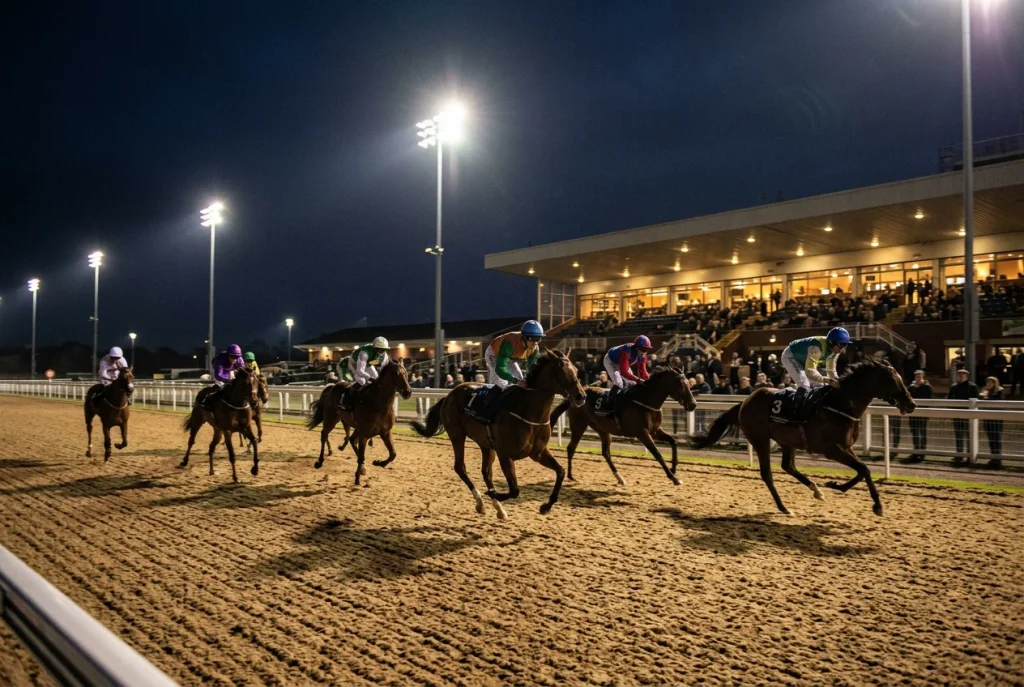
Year-Round Opportunities
All-weather trifecta betting provides consistent opportunities throughout the year when turf racing pauses. British all-weather tracks at Wolverhampton, Chelmsford, Newcastle, Southwell, Lingfield, and Kempton offer daily cards that support regular trifecta engagement regardless of season.
The synthetic surfaces used at these venues create distinct racing dynamics that differ from turf. Understanding these differences improves selection accuracy and trifecta construction on artificial surfaces. Form translation between surfaces requires careful analysis rather than assumption.
All-weather racing attracts a specific population of horses. Some thrive on artificial surfaces while struggling on turf; others show the opposite pattern. Identifying surface specialists creates trifecta opportunities where the general betting public undervalues or overvalues runners based on irrelevant turf form.
Winter all-weather racing receives less media attention than summer turf festivals, potentially creating market inefficiencies for prepared punters to exploit. The reduced spotlight may leave value undiscovered by casual bettors.
Year-round opportunities await punters who master all-weather dynamics. The following sections address surface variations, track-specific considerations, and strategic approaches for synthetic racing.
All-Weather Trifecta Strategy — More on this topic at trifecta box bet.
Surface Variations
British all-weather tracks use three primary surface types, each producing different racing characteristics. Polytrack surfaces at Chelmsford, Lingfield, and Kempton offer consistent racing with good kickback properties. Tapeta at Wolverhampton and Newcastle provides firm, fast racing that suits front-runners. Fibresand at Southwell creates the most distinctive surface, favouring certain running styles distinctly.
Form earned on one surface type may not transfer to another. A horse that excels on Polytrack might struggle with Tapeta’s different feel and racing dynamics. Track your selections’ surface-specific records rather than combining all-weather performances into a single category.
Southwell’s Fibresand surface proves particularly unique. The kickback affects horses differently than other surfaces, and the racing style favours hold-up runners who can pick through tired front-runners in the closing stages. Specialists at Southwell may prove virtually unraceable elsewhere; likewise, horses that excel on other all-weather surfaces may hate Fibresand.
Weather affects all-weather surfaces less dramatically than turf, creating more predictable racing conditions. However, extreme cold can firm up surfaces while heavy rain creates slightly slower conditions. Check how recent weather has affected your target track’s going description.
Draw advantages vary by surface and track configuration. Wolverhampton’s tight turns create draw biases in certain races that differ from Chelmsford’s flatter layout. Research track-specific draw statistics before finalising selections.
Surface maintenance schedules affect consistency. Tracks resurface periodically, potentially changing racing characteristics. Note when your regular venues undergo surface work, as form achieved before changes may not apply afterward.
The BHA Racing Report recorded 21,728 horses in training during 2025, with a significant proportion contesting all-weather events during the winter months when turf racing pauses. This population sustains competitive all-weather cards throughout the darker months.
Time of year affects all-weather racing patterns. Winter racing attracts different horse populations than summer all-weather meetings, where turf alternatives exist. Understanding these seasonal dynamics improves selection accuracy.
Identifying Surface Specialists
Surface specialists offer the clearest value opportunities in all-weather trifecta betting. Horses that demonstrate consistent form on specific surfaces while failing on turf may be underpriced when returning to their preferred conditions.
Look for horses with multiple wins or places on the same surface. A horse with three Polytrack wins and zero turf successes demonstrates clear surface preference. When that horse returns to Polytrack, its turf failures should not diminish your confidence in its place prospects.
Trainer patterns reveal surface intentions. Some trainers focus heavily on all-weather racing, developing expertise in placing horses on appropriate surfaces. Others treat all-weather meetings as secondary to their turf ambitions. Recognise which trainers take all-weather racing seriously.
Breeding sometimes indicates surface aptitude, though less reliably than form evidence. Certain sires produce progeny that handle artificial surfaces well; others produce offspring that prefer natural turf. Use breeding as supporting evidence rather than primary selection criteria.
First-time all-weather runners create uncertainty that can work for or against you. Some horses discover previously hidden ability on artificial surfaces; others find the experience uncongenial. Include first-timers in your trifecta analysis but recognise the additional uncertainty they introduce.
Horses stepping down from turf racing to all-weather competition warrant close attention. Class droppers on their preferred surface may be overpriced relative to their genuine chances. Conversely, horses moving up from all-weather to turf may face stiffer competition than they can handle.
Course-and-distance form carries particular weight on all-weather surfaces. Horses that have won or placed at the specific track and trip combination demonstrate proven ability under identical conditions.
Strategic All-Weather Approaches
All-weather meetings often feature smaller fields than major turf fixtures, affecting trifecta viability. Check field sizes before committing to all-weather trifectas; races with fewer than eight runners may not offer sufficient dividend potential to justify box costs.
Pool sizes at all-weather meetings typically run smaller than equivalent turf fixtures. Smaller pools create more volatile dividends where individual betting patterns can shift outcomes substantially. The same result might produce significantly different dividends on different days depending on how money distributes.
See also Trifecta Staking Plans.
Research from Geegeez found that trifecta dividends exceeded tricast dividends by 26% on average, a premium that applies to all-weather racing as much as turf events. This systematic advantage rewards punters who engage with winter racing rather than hibernating until spring.
Regular all-weather form creates more reliable data than sporadic turf appearances. Horses that race frequently on all-weather surfaces generate extensive form records that support confident analysis. Use this data depth to identify genuine place contenders.
Evening all-weather meetings offer consistent trifecta opportunities with less public attention than afternoon cards. These meetings may contain inefficiencies that more scrutinised daytime racing does not, creating value for prepared analysts.
Handicap ratings on all-weather surfaces may differ from turf equivalents for certain horses. A horse rated 75 on turf might perform to 82 on its preferred synthetic surface, or vice versa. Understanding these rating differentials identifies value selections.
Combine all-weather specialists with pace analysis for optimal trifecta construction. Identify which horses will compete for the lead, which will track, and which will come from behind. All-weather racing often favours front-runners on faster surfaces, adjusting your combination accordingly.
The winter all-weather calendar provides trifecta opportunities when turf racing hibernates. Maintain engagement during this period to capture value that summer-only bettors miss. Year-round betting suits the patient, disciplined approach that trifecta success requires.
All-weather championships and finals days generate enhanced pools and prestige racing. These events attract the best all-weather horses competing for substantial prizes, creating trifecta opportunities with both competitive fields and meaningful pool depth.
Build familiarity with all-weather circuits through consistent engagement. The more races you analyse and bet on specific surfaces and tracks, the better your judgment becomes. Experience compounds into edge that occasional visitors cannot match.
Develop relationships with specific all-weather tracks rather than spreading attention thinly across all venues. Deep knowledge of one or two tracks outperforms superficial familiarity with many. Choose tracks that suit your schedule and focus your efforts accordingly.
All-weather racing rewards patient, systematic approaches. The consistent schedule allows regular engagement without the seasonal gaps that turf racing creates. Use this consistency to build betting habits and analytical skills that compound over time into genuine expertise.
