
Cheltenham Festival Trifecta Guide: Tips and Historical Payouts
Cheltenham’s Unique Betting Profile
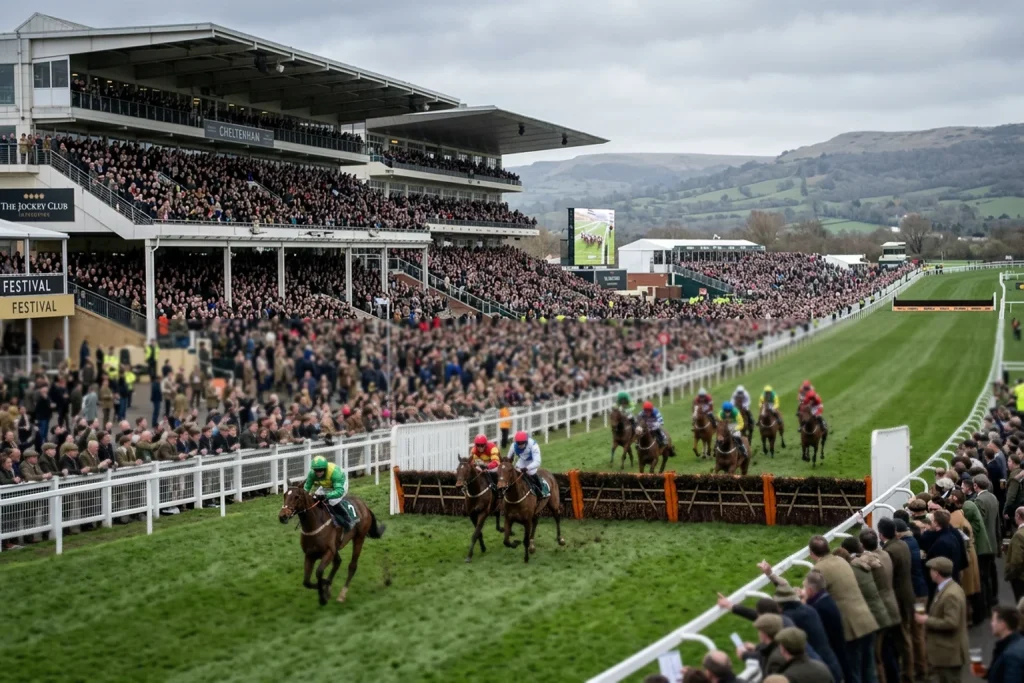
The Cheltenham Festival creates trifecta conditions found nowhere else in the racing calendar. Four days, twenty-eight races, and the most competitive fields in jump racing combine to produce dividends that range from disappointing to life-changing. Understanding Cheltenham trifecta dynamics requires recognising what makes the meeting exceptional and how those factors shape exotic betting value.
The Festival draws runners from Ireland, Britain, and increasingly France, creating international competition that compresses form lines. Horses that dominated domestic campaigns meet equally accomplished rivals, making finishing order prediction genuinely difficult. This competitive depth typically benefits trifecta punters because it produces more unexpected results and larger pool distributions to winning tickets.
Pool sizes at Cheltenham dwarf typical meeting figures. The influx of once-a-year punters, media attention, and the prestige of Festival victories combine to generate trifecta pools that support substantial dividends even when relatively predictable results occur. The 2025 racing season saw total UK attendances exceed five million for the first time since 2019, according to the BHA Racing Report, with Cheltenham contributing significantly to that figure.
The meeting’s structure creates daily rhythm. Each day builds toward a feature race, with the Gold Cup serving as the meeting’s climax. Betting interest peaks for these feature events, generating the largest pools and therefore the most significant trifecta opportunities. Earlier races on each card offer smaller pools but often more competitive fields where value hides from casual punters.
Festival fortunes await punters who prepare properly. The meeting demands specific strategic adjustments that differ from everyday racing, and recognising these differences separates profitable approaches from hopeful speculation.
Gold Cup Trifecta Patterns
The Cheltenham Gold Cup represents jump racing’s championship race, and its trifecta dividends reflect the event’s status. Fields typically comprise twelve to sixteen runners, placing the race within the optimal field size range for trifecta value. Quality throughout the field means multiple horses carry genuine winning credentials, not just the market principal.
Historical Gold Cup trifectas show considerable variation. Years when the market favourite delivers produce compressed dividends as the short-priced winner anchors the combination. Years featuring 14/1 or longer-priced winners see dividends expand rapidly. The race’s reputation for competitive renewals means outsider-involved trifectas occur frequently enough to reward punters who include value selections.
The staying trip and demanding Old Course terrain eliminate horses that might place in ordinary conditions. Three miles and two furlongs over twenty-two fences exhausts pretenders, leaving only genuinely talented and fit horses to contest the finish. This attrition benefits form analysis because it emphasises stamina and jumping credentials that can be assessed through prior performances.
Previous Festival form provides valuable guidance for Gold Cup trifectas. Horses that have placed in the previous year’s Gold Cup, or won other Festival races, demonstrate the specific combination of ability and temperament required. First-time Festival runners face unknowns that increase their uncertainty regardless of domestic form.
Pool behaviour in the Gold Cup differs from smaller races. Money pours in throughout the betting window, with significant volumes arriving in the final minutes before the off. This late activity can shift pool distributions, particularly when sentiment attaches to popular horses. The trifecta dividend announced after the race reflects the final pool state, which may differ from indicative figures displayed earlier.
Irish challengers deserve particular attention in Gold Cup analysis. Recent renewals have seen Irish-trained runners dominate, with trainers timing their horses specifically for this race. The cross-channel form comparison adds complexity but also creates pricing inefficiencies that alert trifecta bettors can exploit.
Champion Hurdle and Other Feature Races
Each day at Cheltenham features races with distinct trifecta characteristics. The Champion Hurdle, Stayers’ Hurdle, and Champion Chase attract small but elite fields where form compression can limit dividends. Handicaps like the County Hurdle and Grand Annual offer larger fields with greater uncertainty.
Premier fixtures at major meetings showed stable turnover per race in 2025, contrasting with core fixtures that experienced declines, according to BHA data. Cheltenham represents the pinnacle of premier jump racing, drawing betting interest that sustains robust trifecta pools across all four days.
Graded races favour class over speculation. The Champion Hurdle typically sees favourite positions contested by two or three horses that dominate the market. When one of these principals wins, trifecta dividends depend heavily on which horses fill second and third. The value often lies in identifying place horses rather than the winner, since the market efficiently prices winning chances but sometimes overlooks place credentials.
Festival handicaps operate differently. The Coral Cup, Pertemps Final, and Martin Pipe Conditional Jockeys’ Handicap Hurdle feature large fields with compressed weights. Any horse within ten pounds of the top weight has winning potential if conditions suit. These races produce Festival trifectas at the higher end of the dividend range because finishing order prediction becomes exceptionally difficult.
The County Hurdle demonstrates Festival handicap dynamics clearly. Twenty or more runners, all handicapped to have theoretical chances, create trifecta combinations that the market struggles to price accurately. When three well-handicapped horses at double-figure prices fill the frame, dividends reflect the genuine unlikelihood of that specific outcome.
Festival-Specific Strategy
Timing your Festival trifectas matters more than at ordinary meetings. Pool sizes grow substantially throughout race day, with the largest volumes arriving for feature events. Earlier races on each card may see thinner pools where unusual results produce disappointing dividends despite the low probability of those outcomes.
The feature race on each day commands the deepest pools. Gold Cup day builds toward the main event, with punters accumulating through earlier races. Waiting for these premium pools improves your expected dividend when correct, though it also means competing against the full weight of Festival betting interest.
Irish-trained challengers require careful consideration. The Cheltenham Festival has become increasingly dominated by runners from across the Irish Sea, with trainers like Willie Mullins and Gordon Elliott sending raiders that often outperform market expectations. Form from Irish racing translates imperfectly to Cheltenham conditions, creating both value opportunities and traps.
Ground conditions at Cheltenham change through the four days. Heavy ground on day one may yield to softer conditions by day four if weather intervenes, or firm ground may develop if dry conditions persist. Horses suited to prevailing conditions outperform their form figures, while those unsuited underperform. Checking ground preferences before finalising trifecta selections avoids including horses unlikely to handle conditions.
Box costs escalate quickly in competitive Festival fields. A conservative approach limits boxes to four horses maximum for most races, accepting reduced coverage in exchange for manageable outlays. Key boxing strong fancies while including longer-priced place horses captures Festival value without requiring the unsustainable costs of large full boxes across multiple races.
The novice races often provide underappreciated trifecta opportunities. The Supreme and Arkle attract talented horses with limited records over fences or hurdles, making assessment difficult. When progression from point-to-point or bumper form proves greater than expected, the market misprices finishing order, creating dividend value for punters who correctly identified improvers.
The Festival rewards preparation over impulse. Identify target races weeks in advance, monitor entries and withdrawals, assess ground preferences, and size your bets according to your convictions. Festival fortunes flow to punters who treat the meeting as a campaign rather than a series of disconnected opportunities.