
Greyhound Tricast Box Betting: Dog Racing Guide
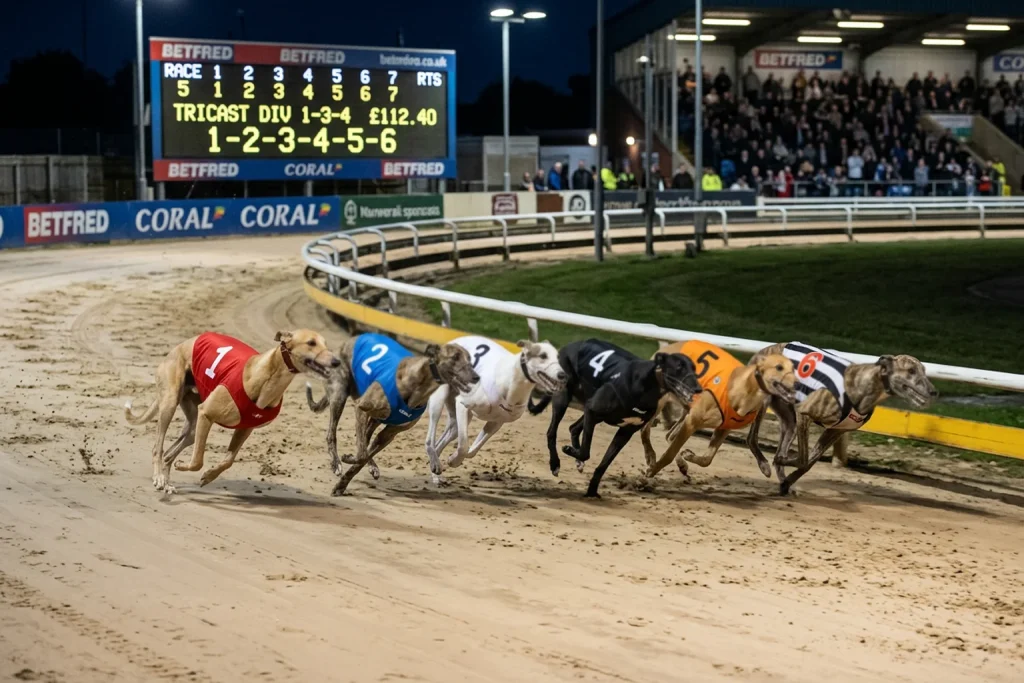
Tricast Betting on the Dogs
Greyhound tricast box betting applies familiar exotic bet principles to a fundamentally different sport. The six-trap format creates fixed field sizes that simplify combination calculations while introducing unique tactical considerations. Understanding how greyhound racing differs from horse racing lets you adapt tricast strategies rather than simply transferring them unchanged.
The appeal of greyhound tricasts lies in their accessibility. Races occur throughout the day and evening at multiple tracks, providing far more betting opportunities than horse racing. The shorter race duration, typically around thirty seconds, means rapid turnover. A determined tricast bettor can assess, bet, and settle multiple races in an hour.
However, this frequency creates its own challenges. The temptation to bet every race dilutes selectivity. Successful greyhound tricast betting requires the same discipline as horse racing: wait for conditions that favour your approach rather than forcing bets when value is absent.
British greyhound racing operates at venues including Romford, Crayford, Monmore, and Sheffield, each with distinct track characteristics that influence results. The sport attracts a dedicated following and generates steady betting turnover, particularly for evening meetings that provide entertainment after horse racing concludes for the day.
Track to track adaptation matters. Greyhound racing shares the goal of predicting finishing order but operates under different constraints and with different informational inputs. What works for horse racing tricasts requires modification for the dogs.
Six-Dog Dynamics
Standard greyhound races feature six runners, one from each trap. This fixed field size creates predictable tricast mathematics. A full six-dog box produces 6 × 5 × 4 = 120 combinations. At 10p per combination, the total cost reaches £12. This represents substantially lower outlay than comparable horse racing boxes in larger fields.
Tricasts on greyhound races are available on most races with six or more dogs, according to Betting.co.uk. Some meetings run races with reduced fields of four or five dogs, typically due to withdrawals. Tricast availability may be restricted in these cases, and the reduced combination count affects both costs and dividend expectations.
The cost advantage of six-dog fields cuts both ways. Lower outlay means you can bet more races without straining your bankroll, but lower combination counts also compress dividends. The same result that might produce a £500 trifecta in a fourteen-horse handicap might yield £80 in a six-dog greyhound race. Pool sizes and SP-based calculations both reflect the smaller field’s reduced unpredictability.
Boxing three or four dogs offers a practical middle ground. A three-dog box costs just 6 combinations, making it affordable even at higher unit stakes. A four-dog box costs 24 combinations, still manageable for most bankrolls. These partial boxes provide coverage while maintaining sensible cost control.
The mathematics simplify race-by-race decisions. You know before the meeting begins exactly what a three-dog, four-dog, or full box costs. This predictability allows pre-race budgeting that horse racing’s variable field sizes complicate. Set your evening’s allocation, divide by your intended box structure costs, and you know how many races you can engage.
Greyhound-Specific Factors
Trap position influences greyhound results far more than draw affects horse racing. Inside traps, particularly trap one, suit dogs that want to lead from the start. Wide traps favour strong runners who need room to manoeuvre. The sectional times and running styles that determine which dogs secure early position shape the entire race outcome.
Trap bias varies by track. Some circuits favour inside runners through the first bend, giving trap one a persistent advantage. Others feature wider bends that allow outside runners to maintain position. Studying track-specific statistics reveals these biases, which you should incorporate into tricast construction.
Running style assessment differs from horse racing form analysis. Early pace matters enormously because greyhound races cover shorter distances with fewer opportunities to recover from poor positions. A dog that requires time to reach full speed may possess the fastest raw pace but still fail to place because quicker starters establish unassailable leads through the first two bends.
Kennel form provides insight unavailable in horse racing. Greyhounds from the same kennel share training methods, diet, and preparation routines. When a kennel’s dogs perform above or below expectations across multiple races, this pattern often predicts continued over or underperformance until conditions change. Following kennels rather than individual dogs can identify systematic value.
Recent race frequency matters. Greyhounds race more often than horses, sometimes weekly. A dog returning from two weeks off may need a run to sharpen, while a dog racing for the third time in eight days may tire. The race card shows recent runs; interpret them with attention to both results and recovery time.
Grading systems differ between tracks but generally match dogs of similar ability. An A1 grader at one track competes against other A1 dogs, creating competitive races where any runner might place. Open races attract better dogs but also feature more predictable form lines. Match your tricast approach to the race grade.
Greyhound vs Horse Tricast
The fundamental difference lies in field size and its consequences. Horse racing handicaps typically feature eight to twenty runners. Greyhound races standardise at six. This single variable ripples through every aspect of tricast betting.
Dividend expectations adjust accordingly. Research from Geegeez on horse racing found trifecta payouts averaging 26% higher than tricast dividends across 1,011 races. Greyhound racing lacks comparable published research, but the smaller field size logically compresses dividends compared to larger horse racing fields. Expect lower payouts for equivalent price combinations.
Cost efficiency favours greyhounds. A complete field box at horse racing’s minimum practical size of eight runners costs 336 combinations. The greyhound equivalent costs 120 combinations. If you want full coverage of the field, greyhound racing achieves it at roughly one-third the cost.
Information availability differs significantly. Horse racing form includes detailed race comments, sectional times, going preferences, and extensive historical data. Greyhound racing provides trap times, recent results, and kennel information, but the depth of analysis available to horse racing punters does not transfer. You work with less information on dogs, which increases randomness in short-term results.
Race frequency affects psychological discipline. Horse racing might offer ten suitable trifecta opportunities across a Saturday card. An evening greyhound meeting features twelve races at a single track, with multiple tracks operating simultaneously. The constant availability tests your ability to wait for genuine value rather than betting from boredom.
The speed of greyhound racing creates different mental demands. A horse race unfolds over one to four minutes, allowing time to process developments. A greyhound race concludes in under thirty seconds, leaving little time for adjustment. Your analysis happens entirely before the race; once the traps open, the result emerges almost immediately.
Both sports reward selective betting over volume. The structural differences between greyhound and horse tricasts require adapted tactics, but the core principle remains: identify conditions favouring your approach, bet when those conditions appear, and abstain when they do not. Track to track, the mathematics of tricast value demand discipline above all else.