
Trifecta Box Payout Examples: Real Dividends Analysed
Learning from Real Numbers
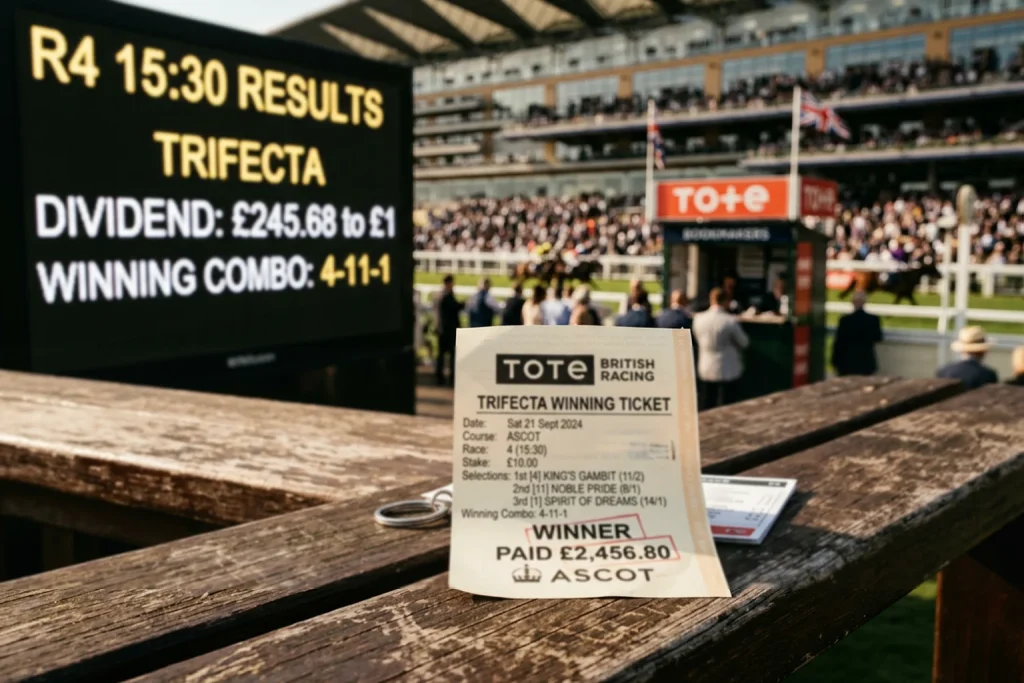
Trifecta payout examples from actual races provide the clearest education in what exotic betting can deliver. Theoretical discussions of combination counts and probability calculations become meaningful only when grounded in real dividends that real punters received. These examples illustrate both the potential ceiling and the typical floor of trifecta returns.
The range of possible outcomes spans from disappointing to life-changing. A trifecta involving three short-priced horses might return less than an accumulator on the same selections. A trifecta featuring three outsiders can produce returns exceeding £100,000. Understanding what drives these differences helps you target races with genuine value potential.
Real numbers, real lessons. The following examples draw from documented UK racing dividends to show exactly what trifecta betting has produced and what factors created those outcomes.
Studying historical payouts develops realistic expectations. Many punters enter trifecta betting imagining every win will produce four-figure returns. The data shows a more nuanced picture where modest payouts occur frequently, substantial payouts occur occasionally, and exceptional payouts occur rarely but memorably.
High Payout Examples
The record UK trifecta dividend stands at £122,667.10, achieved in the 2024 Coventry Stakes at Royal Ascot. According to Sandracer data, this exceptional payout resulted from an 80/1 winner followed by horses at 40/1 and 50/1. The Computer Tricast for the same result paid £83,273.26, demonstrating the pool-based trifecta’s premium in this extreme case.
The Grand National consistently produces five-figure trifecta dividends. The 2016 renewal paid £57,778 to the trifecta when Rule The World won at 33/1 with The Last Samuri (8/1) second and Vics Canvas (100/1) third. The forty-runner field and the 100/1 third-placed horse drove the dividend to exceptional levels.
Several factors created these high payouts. The price combination matters most directly: three long-priced horses filling the frame produces dividends that multiply together rather than adding. An 80/1 winner alone suggests roughly 80× base return; adding 40/1 and 50/1 for the places compounds this into five-figure territory.
Field size contributed indirectly. Both races featured large, competitive fields where numerous combinations were possible. This spread pool money thinly across thousands of permutations, leaving minimal coverage on the winning combination. When few tickets hold the result, the pool distributes among few winners.
Pool depth at major meetings enabled these dividends to reach their full potential. Thin pools at minor meetings might cap exceptional results through limited total money available. Royal Ascot and Grand National generate pools sufficient to support six-figure dividends when conditions align.
Two-year-old races like the Coventry Stakes create conditions for record dividends because horses have limited form histories. The market struggles to price unexposed runners accurately, leading to occasional dramatic underestimates of genuine ability. When several underestimated horses fill the frame together, record dividends result.
These examples represent outliers rather than typical expectations. A punter betting trifectas weekly for a decade might experience one or two dividends in this range. The examples prove the ceiling exists; they do not suggest it can be reached reliably or frequently.
Modest Payout Examples
Most successful trifecta bets return far less dramatic dividends. A typical Saturday handicap might produce a trifecta paying between £100 and £500 when moderately-priced horses fill the first three positions.
Consider a representative example: a twelve-runner handicap where an 8/1 winner is followed by horses at 10/1 and 6/1. This combination produces a Computer Tricast dividend in the £200-£400 range depending on exact starting prices. The Tote trifecta might pay slightly more or less depending on pool distribution.
These modest payouts represent the realistic bulk of successful trifecta outcomes. A five-horse box at £6 total cost returning £250 delivers genuine profit and validates the approach. The return does not transform your financial life but demonstrates that consistent, well-analysed trifecta betting can generate meaningful supplementary returns.
Weekday racing at smaller meetings produces more compressed dividends. Thinner fields, lower pool sizes, and less competitive racing combine to reduce average payouts. A successful trifecta at a Monday afternoon card might return £80-£150 where the same result at a Saturday feature meeting would return substantially more.
Managing expectations around these modest returns prevents disappointment. If you bet trifectas expecting every success to produce four-figure dividends, frequent £150 returns will feel underwhelming despite being profitable. If you understand the typical range, the same £150 feels like a successful outcome that confirms your analysis.
Research from Geegeez found that trifectas outperformed tricasts by an average of 26% across 1,011 UK handicap races. This premium applies to modest returns as well as spectacular ones. A tricast paying £200 becomes a trifecta paying approximately £250, meaningful value that accumulates over repeated successful bets.
Track your actual returns to build a personal database of outcomes. Over time, patterns emerge showing which meetings, race types, and field sizes produce returns worth the cost of your typical boxes. Let data rather than hope guide your race selection.
Disappointing Payouts
Not all winning trifectas feel like victories. When short-priced horses dominate the places, dividends compress to levels that barely justify the bet or even fail to return the cost of a box.
A race where the 6/4 favourite wins with the 3/1 second favourite second and the 7/2 third favourite third produces trifecta dividends that might total only £25-£40. A five-horse box costing £6 returns profit, but a six-horse box at £12 might barely break even despite correctly identifying all three placed horses.
The mathematics explain this compression. Favourites attract the majority of betting volume in win markets. This popularity extends to exotic pools where combinations involving favourites receive disproportionate coverage. When favourites deliver, many tickets win, dividing the pool among numerous holders.
Races dominated by one or two obvious contenders offer poor trifecta value regardless of outcome. Even if an outsider fills third place, the short-priced first and second anchor the dividend at disappointing levels. The third horse’s price provides multiplication, but multiplying by small numbers produces small results.
Avoid races with strong favourites for trifecta purposes unless you are specifically excluding those favourites from your box. A race where the 4/6 favourite “can’t lose” offers essentially no trifecta value. Your analytical energy produces better returns applied to races where genuine uncertainty exists across multiple positions.
Some punters deliberately target races where the favourite is vulnerable. Analysing situations where market leaders face conditions that might compromise their chances creates contrarian value. When favourites fail and your box succeeds without them, dividends expand substantially.
Track your disappointing payouts alongside your successful ones. Understanding the full distribution of your trifecta returns helps set realistic expectations and guides race selection toward higher-value opportunities.