
Royal Ascot Trifecta Betting: Record £122,667 Payout Analysis
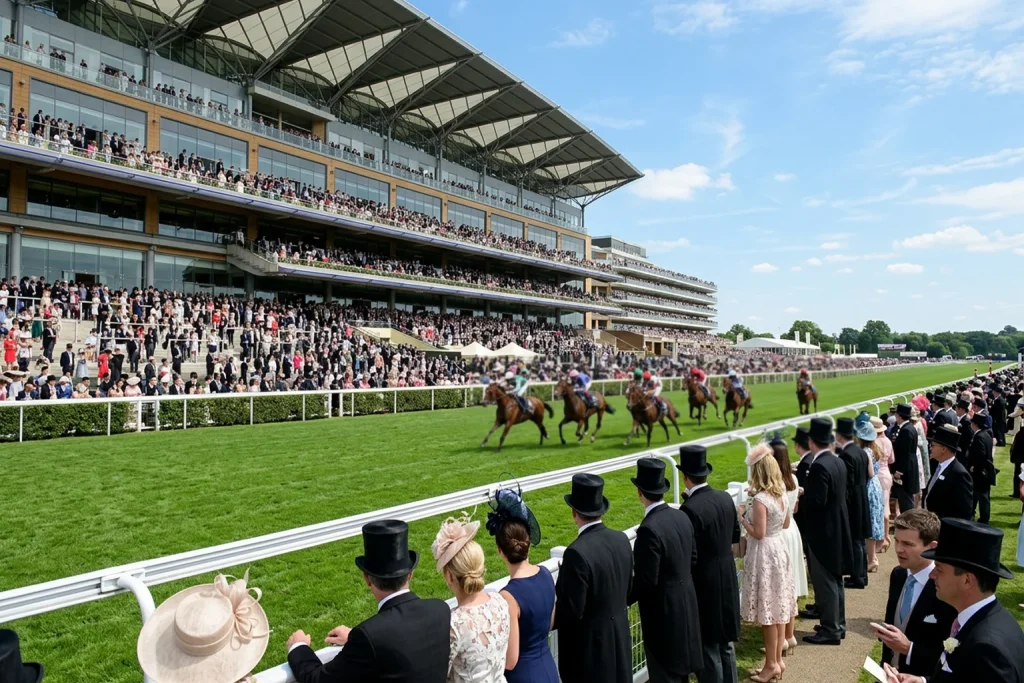
A Record-Breaking Royal Meeting
Royal Ascot produces the largest flat racing trifecta pools in Britain. The June meeting combines prestige, field quality, and public interest in ways that generate dividends unavailable at any other fixture. The record Royal Ascot trifecta stands at £122,667.10, achieved in the 2024 Coventry Stakes, a figure that illustrates both the potential ceiling and the specific conditions required to reach it.
The Royal Meeting operates on a different scale from standard racing. Five days of Group-level competition attract runners from across Europe and beyond, with trainers timing their horses specifically for Ascot opportunities. Betting volumes reflect this quality, with trifecta pools dwarfing those available at ordinary fixtures.
Understanding what made the 2024 Coventry Stakes record possible reveals broader principles about Royal Ascot trifecta value. The payout resulted from a specific combination of unlikely prices that the market failed to anticipate. Such outcomes cannot be predicted reliably, but the conditions that enable them can be identified and exploited.
The meeting’s prestige attracts casual betting interest that inflates pools beyond what form-focused punters alone would generate. This recreational money often concentrates on familiar names and shorter prices, leaving value in combinations involving less-fashionable runners. When those overlooked horses deliver, the pool distributions reward the contrarians handsomely.
The 2024 Coventry Stakes Record
The Coventry Stakes serves as the premier two-year-old race of Royal Ascot week, traditionally identifying future Classic contenders. The 2024 renewal featured a competitive field where the market spread money across multiple contenders rather than concentrating on a single favourite.
The winning combination produced the record: an 80/1 winner followed by horses at 40/1 and 50/1 for second and third. According to Sandracer data, this produced a trifecta dividend of £122,667.10 to a £1 stake. The Computer Tricast for the same result paid £83,273.26, demonstrating the substantial premium that trifecta pools can deliver over SP-based calculations.
The price combination explains everything. Three horses at long odds finishing in the first three represents an outcome the market considered extremely unlikely. The cumulative implied probability of that specific ordering sat below 0.01%, meaning almost no money in the pool covered the winning combination. The entire pool distributed among a tiny number of winning tickets.
Two-year-old racing creates conditions for such results more often than other race types. The horses have limited form histories, making assessment difficult. Trainers bring unexposed types to Ascot hoping for improvement, and sometimes that improvement proves dramatic. The betting market struggles to price horses with only one or two prior runs accurately.
The Coventry Stakes field size typically falls in the twelve to eighteen runner range, large enough to generate trifecta value but small enough for the race to maintain competitive quality. This combination creates dividend potential without the cost explosion associated with truly massive fields like the Grand National.
Why This Payout Was Exceptional
Several factors converged to produce the record. The price combination came first: all three placed horses trading at 40/1 or longer meant the market had assigned minimal probability to each, and almost zero probability to their specific ordered combination.
Pool dynamics amplified the effect. Royal Ascot attracts recreational punters who back horses based on names, jockeys, or trainers they recognise. These bettors concentrated money on shorter-priced runners with established reputations, leaving the eventual winners lightly backed. When the market favourites failed to place, the pool distributed to the few tickets holding the correct combination.
The trifecta-tricast gap of nearly £40,000 reflected pool composition. Tricast dividends derive from a formula applied to starting prices, producing consistent if lower returns. Trifecta dividends depend on how money actually distributed across combinations. The 2024 Coventry pool had minimal coverage on the winning combination, so its dividend far exceeded what the SP-based calculation produced.
Richard Wayman, Director of Racing at the British Horseracing Authority, has observed that the horse population continues to decline while the betting environment remains challenging, with obvious implications for racing’s finances. Despite these headwinds, premium meetings like Royal Ascot continue attracting betting interest that supports substantial trifecta pools. The record dividend occurred within a broader context of industry pressure, making its scale all the more notable.
The two-year-old factor proved crucial. Horses with limited racing histories resist accurate assessment. Some improve dramatically from debut runs. Others regress from promising introductions. The market cannot price these trajectories reliably because insufficient data exists. When three improving types coincidentally finish ahead of more exposed rivals, the prices reflect the market’s prior uncertainty rather than the horses’ actual abilities on the day.
Replication cannot be engineered. You cannot identify in advance which races will produce record dividends. What you can do is position yourself to benefit when extreme outcomes occur: bet trifectas in races with competitive fields, include value selections at longer prices, and ensure you have coverage on unlikely but plausible combinations.
Royal Ascot Trifecta Strategy
Premium meeting trifectas demand adjusted approaches. Pool sizes at Royal Ascot dwarf ordinary meetings, which changes the risk-reward calculation. Larger pools support larger dividends when unusual results occur, justifying higher outlays than you might risk on a Wednesday afternoon at Wolverhampton.
Race selection matters intensely. The Royal Hunt Cup and other Ascot handicaps feature large fields with genuine depth, creating trifecta conditions similar to the Coventry Stakes. Research from Geegeez found trifecta payouts exceed tricast dividends in 80% of UK races, with the advantage widening to 25% or more in fields of 12-14 runners—precisely the profile many Ascot handicaps fit. Group races with smaller fields of eight to twelve runners still generate large pools but compress dividend potential through favourite-heavy results. Target races where field size and competitive uncertainty align.
Two-year-old races offer particular opportunities. The Coventry, Norfolk, Queen Mary, and Windsor Castle Stakes all feature horses with limited form records that the market struggles to price accurately. Including unexposed runners from trainers with strong juvenile reputations captures value that more form-bound analysis might miss.
Cost discipline prevents Royal Ascot enthusiasm from depleting your bankroll. Five days of racing creates repeated temptation to bet beyond your means. Set daily and meeting-wide limits before the first race, and stick to them regardless of interim results. The record dividend required holding a winning ticket, which in turn required having funds to stake.
Box construction for Ascot should lean toward including value prices rather than concentrating on obvious contenders. The Coventry record resulted from three long shots placing. A box containing only market leaders would have missed it entirely. Balance your selections across price ranges, accepting that some included horses will disappoint while maintaining coverage for outsider-filled frames.
Timing your bets affects pool position though not pool outcome. Early trifecta bets lock in your combinations but give no indication of final pool distribution. Late bets benefit from observing where money has flowed throughout the day, though Royal Ascot pools grow so large that late movements rarely shift the overall distribution dramatically.
Record-breaking Ascot dividends reward punters who combine patience, value orientation, and cost awareness. The record stands as evidence of what is possible. Your task is positioning to capture similar, if smaller, outliers when they occur.