
Superfecta vs Trifecta Box: Four-Horse vs Three-Horse Bets
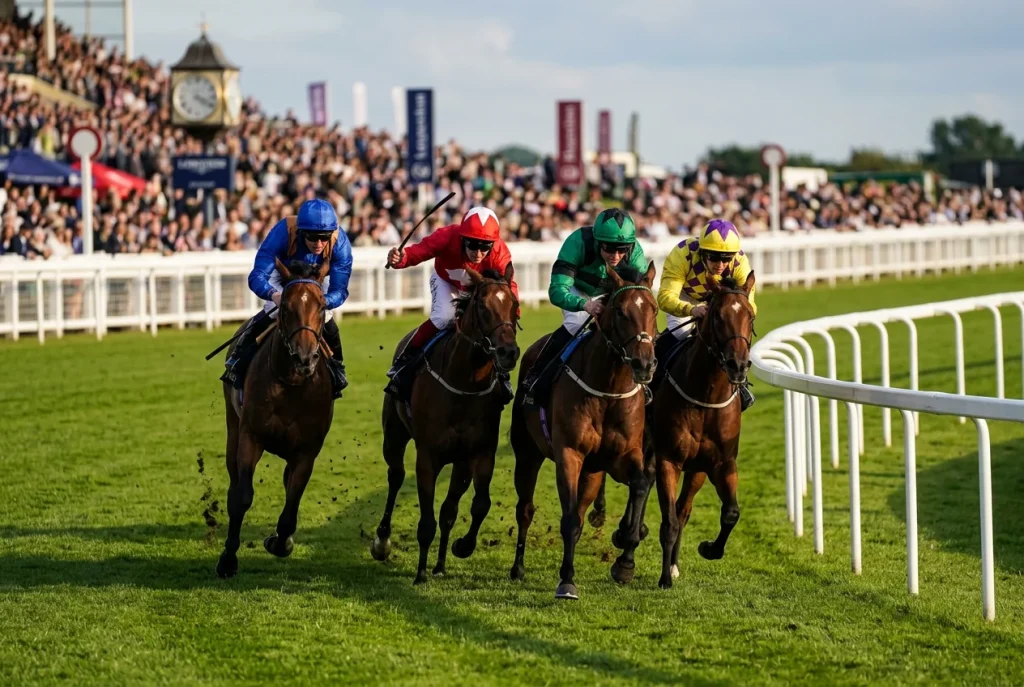
The Fourth Dimension
Superfecta betting extends the trifecta challenge by one additional horse. Where trifecta requires predicting the first three finishers in order, superfecta demands the first four. This escalation from three to four transforms the betting landscape entirely, creating opportunities for massive returns alongside equally massive complexity.
The superfecta vs trifecta comparison reveals diminishing returns from added difficulty. Each additional horse you must predict correctly multiplies the challenge without necessarily multiplying the reward proportionally. Understanding this relationship helps determine when the superfecta genuinely offers value versus when it represents speculation dressed as strategy.
UK bookmakers offer superfecta products under various names, though availability is less consistent than for trifecta betting. Pool liquidity varies significantly, affecting dividend reliability. The bet suits punters with specific risk profiles and race scenarios rather than serving as a universal exotic upgrade from trifectas.
The fourth dimension adds mathematical and analytical challenges that fundamentally change the betting proposition.
American racing popularised the superfecta, where large fields and substantial pools create conditions for meaningful dividends. UK racing offers fewer opportunities meeting these criteria, making superfecta betting a selective rather than routine activity for British punters.
Combination Explosion
Superfecta combinations follow the formula n × (n-1) × (n-2) × (n-3), where n represents the number of horses in your selection pool. The fourth factor creates exponential growth that rapidly exceeds practical bankroll limits.
Consider the numbers directly. A four-horse trifecta box contains 4 × 3 × 2 = 24 combinations. The equivalent superfecta box, using the same four horses, contains 4 × 3 × 2 × 1 = 24 combinations. The counts match because with only four horses, every trifecta combination extends to exactly one superfecta combination.
The divergence becomes dramatic with more horses. A five-horse trifecta box costs 60 combinations. A five-horse superfecta box costs 5 × 4 × 3 × 2 = 120 combinations, double the trifecta. A six-horse trifecta box costs 120 combinations. A six-horse superfecta box costs 6 × 5 × 4 × 3 = 360 combinations, triple the trifecta.
At seven horses, trifecta boxes cost 210 combinations while superfecta boxes cost 840 combinations, four times as many. At eight horses, the ratio reaches five to one: 336 trifecta combinations versus 1,680 superfecta combinations.
Cost implications follow directly. At 10p minimum per combination, a six-horse superfecta box costs £36 compared to £12 for the trifecta. An eight-horse superfecta box costs £168 versus £33.60 for the trifecta. The escalation makes larger superfecta boxes prohibitively expensive for most recreational bankrolls.
This combination explosion explains why superfecta betting requires either very small selection pools or very high confidence in specific horses. Broad coverage approaches that work adequately for trifectas become mathematically untenable when extended to four horses.
Part wheeling offers cost control. Keying one horse to win and boxing others for the remaining positions reduces combinations substantially. Understanding these alternative structures becomes essential for anyone serious about superfecta betting without unlimited funds.
Realistic Win Chances
Adding the fourth horse prediction reduces win probability by another order of magnitude compared to trifecta. In a twelve-horse race, possible superfecta combinations number 12 × 11 × 10 × 9 = 11,880. Your single straight superfecta represents roughly 0.0084% chance of success if all horses were equally likely.
Even with substantial boxing, the probabilities remain challenging. A five-horse superfecta box in a twelve-horse race covers 120 combinations out of 11,880 possible outcomes, approximately 1% coverage. You need all five of your selections to finish in the first four positions, with the fifth-place finisher coming from outside your selections.
The fourth horse prediction often proves the most difficult analytically. The horses contesting fourth place typically represent a tier below genuine place contenders but above the remainder of the field. This middle tier can be quite large in competitive handicaps, with six or seven runners having reasonable fourth-place claims.
Form analysis for fourth-place prediction faces informational limits. Race comments focus on winners and placed horses. Sectional times emphasise front-runners and finishers. Horses that finish fourth receive minimal coverage, making systematic analysis of their positioning tendencies difficult. You often end up guessing where genuine analysis would serve trifecta selections.
Research suggests that prediction accuracy deteriorates with each additional position required. If your win selection accuracy is 25%, your second-horse accuracy might be 20%, your third-horse accuracy 15%, and your fourth-horse accuracy could fall below 12%. Multiplying these probabilities shows how quickly superfecta success becomes unlikely even for skilled handicappers.
The mathematical reality suggests superfectas suit occasional high-variance betting rather than consistent strategy. Expect long losing runs punctuated by occasional substantial returns, a profile that suits some temperaments but frustrates others.
Comparing difficulty directly: trifecta requires three correct predictions from twelve horses, superfecta requires four. That single additional prediction multiplies your challenge by approximately nine times in a typical field, far exceeding the additional reward most dividends provide.
When Superfecta Makes Sense
Specific scenarios create genuine superfecta value. Identifying these situations distinguishes strategic superfecta betting from lottery-style speculation.
Large fields with significant outsider potential suit superfectas best. When fifteen or more runners compete and three or four long shots have genuine fourth-place credentials, the superfecta dividend can reach levels that justify the difficulty. The Grand National represents the extreme example, where superfecta dividends regularly reach six figures.
Pool liquidity matters critically. Thin superfecta pools produce erratic dividends where similar outcomes in different races yield wildly different returns. Major meetings like Royal Ascot, Cheltenham, and Grand National day generate sufficient superfecta pool depth to support meaningful dividends. Midweek cards at smaller venues often lack this liquidity.
Keying structures become essential for superfecta affordability. Keying one horse to win while boxing four others for second through fourth reduces combinations dramatically compared to full boxing. A structure with one horse keyed to win and four boxed for places costs 4 × 3 × 2 = 24 combinations rather than 120 for a full five-horse box.
Budget allocation should reflect the high-variance nature of superfecta betting. Dedicate no more than 5-10% of your exotic betting bankroll to superfectas, preserving the majority for trifecta and exacta wagers with higher strike rates. The occasional superfecta hit supplements consistent smaller returns rather than forming the core of your approach.
Consider superfectas as occasional shots at outsized returns rather than regular betting activity. A handful of carefully selected superfecta bets across a racing season, targeting specific large-field events with liquid pools, captures the bet’s genuine value proposition without the bankroll damage that frequent superfecta play causes.
Handicaps at major festivals offer the best superfecta opportunities. The Coral Cup at Cheltenham, the Royal Hunt Cup at Ascot, and similar large-field handicaps combine competitive depth with substantial pool sizes. According to the BHA Racing Report, UK attendances exceeded five million in 2025 for the first time since 2019, with major festivals driving much of this interest and the associated betting pools. These events justify superfecta engagement where ordinary cards do not.
Compare superfecta potential against trifecta alternatives before committing. If the superfecta dividend projects only modestly above the trifecta, the additional difficulty may not justify the extra complexity. Research from Geegeez found trifecta payouts exceed tricast dividends in 80% of UK races, averaging 26% higher—a meaningful edge that does not require the fourth-dimension complexity. The fourth dimension rewards patience and selectivity above all else.