
Tote Trifecta UK: Pool Betting Mechanics and 25% Takeout
How Tote Pool Betting Works
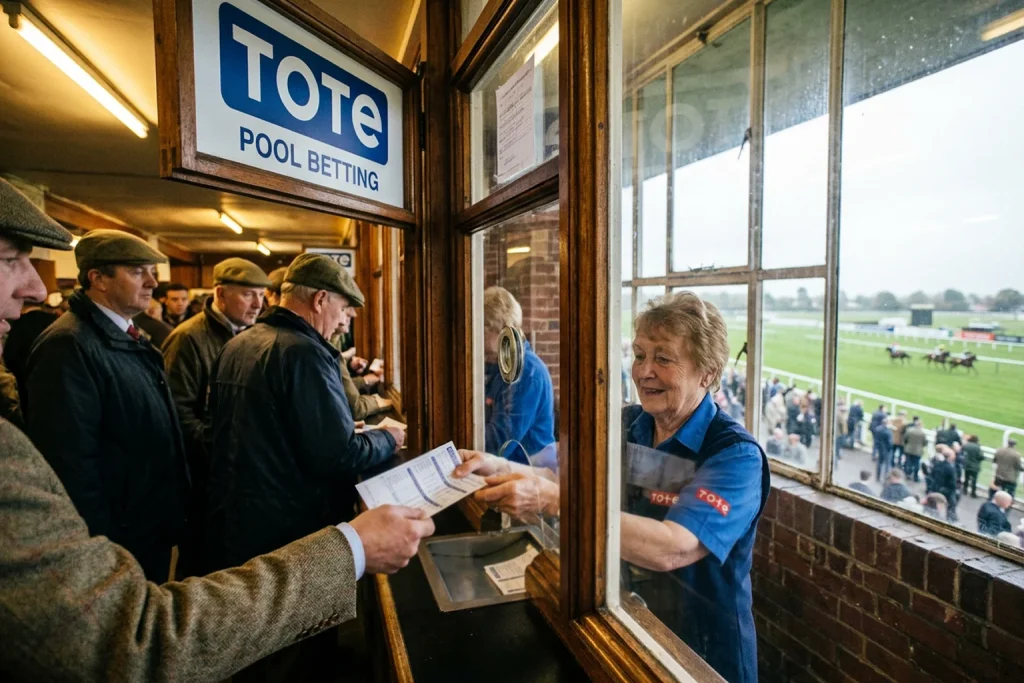
The Tote operates on a fundamentally different principle from fixed-odds bookmaking. When you place a Tote trifecta bet, your stake enters a pool alongside everyone else betting on the same outcome. After the race, the pool distributes among winning tickets after deductions. No odds are fixed at the time of betting. Your return depends entirely on how much was wagered and how many others picked the winning combination.
This pari-mutuel structure creates interesting dynamics. In fixed-odds betting, the bookmaker takes a position against you. They set prices reflecting their assessment of probabilities plus a margin. If they misjudge, they absorb the loss. The Tote faces no such risk. It simply collects money, deducts its percentage, and redistributes the remainder to winners.
For trifecta betting specifically, the pool model often produces larger dividends than the equivalent Computer Tricast. Research from Geegeez covering 1,011 UK handicap races found that Tote trifecta payouts exceeded Computer Tricast dividends in roughly 80% of races, with an average premium of 26%. When the trifecta led, it did so by an average margin of 59%.
The pool model rewards contrarian thinking. If you back combinations that few others select, and one of those combinations wins, you divide the pool among fewer tickets. Popular combinations split the pool more ways, reducing individual returns. This creates value opportunities for punters willing to oppose public opinion.
British racing has operated pool betting since the Racecourse Betting Act of 1928 established the Tote as a legal alternative to on-course bookmakers. The structure has evolved considerably since then, but the core principle remains unchanged: bettors compete against each other for shares of a common pool rather than against a bookmaker who sets and adjusts prices.
Pool Formation and Distribution
Trifecta pools form throughout the betting window, typically opening when bookmakers begin taking bets on a race and closing at the start. Money flows in from on-course Tote terminals, off-course betting shops offering Tote products, online accounts, and commingled international pools where agreements exist.
The pool size varies dramatically by race. A midweek handicap at a smaller course might attract a few thousand pounds. A major festival race like the Cheltenham Gold Cup generates pools in the hundreds of thousands. The Grand National produces the largest UK trifecta pools of the year, with casual punters who bet on nothing else contributing substantial liquidity.
Distribution follows a simple formula after deductions. The total pool minus takeout divides by the number of winning unit stakes. If a £100,000 pool has a 25% takeout, £75,000 remains for distribution. If winning tickets represent 50 units at £1 each, each unit receives £1,500. Your actual return multiplies this unit dividend by your stake size.
When no winning tickets exist, the pool carries over to a specified future race. These carryovers can inflate dividends considerably when they finally resolve, though predicting which race will produce a carryover winner adds another layer of complexity to exotic betting.
The Tote publishes approximate pools before races close, allowing punters to gauge liquidity. Larger pools generally produce more stable dividends because individual large bets have less impact on the final distribution. Thin pools can see dividends swing dramatically based on late money.
Pool composition also affects your strategic approach. On races where a single large syndicate or professional operation places substantial bets on specific combinations, those combinations become less valuable for other punters to hold. The pool divides among more winning tickets, reducing individual returns. Conversely, combinations that professionals ignore can produce outsized dividends when they hit.
The 25% Takeout Rate
UK Tote trifecta pools operate with a 25% deduction before distribution. This takeout funds prize money contributions, operating costs, and the Tote’s commercial requirements. Every pound wagered becomes 75 pence available for winning distribution.
Comparing jurisdictions reveals meaningful differences. Irish trifecta pools carry a 30% takeout, according to Geegeez analysis. That five-percentage-point gap directly impacts expected returns. The same result producing a £1,000 dividend in the UK would yield roughly £833 in Ireland after adjusting for the higher deduction.
The impact compounds across bets. A bettor placing 100 trifecta wagers faces 25% extraction on each pound wagered. Achieving long-term profitability requires overcoming this systematic drag on capital. Mathematical expectation demands that your selections outperform randomness by more than the takeout percentage to generate positive returns.
Some punters question whether the takeout makes trifecta betting mathematically unwise. The counterargument points to information asymmetries. Public money often concentrates on obvious combinations, leaving value in contrarian selections. If the market consistently overweights favourites in trifecta pools, those backing outsiders may achieve positive expectation despite the takeout.
Data from Geegeez supports this theory in part. UK trifecta payouts averaged £153, or 24% higher than comparable Irish dividends. The lower takeout explains some of this gap, but not all. UK pools appear to offer systematically better value, potentially reflecting different betting patterns between the two jurisdictions.
The Horserace Betting Levy Board, which oversees contributions from betting operators to racing, reported levy income of £108.9 million for 2024/25 according to their annual report. This funding supports prize money and racing infrastructure, demonstrating how betting activity, including pool betting, underpins the sport’s economics.
Tote vs Bookmaker Tricast
Choosing between Tote trifecta and bookmaker tricast involves weighing several factors. Neither option dominates in all circumstances. Understanding when each excels helps optimise your exotic betting approach.
Availability differs significantly. Tote trifecta requires sufficient pool liquidity to produce meaningful dividends. Smaller races may lack this liquidity, leaving the Tote option either unavailable or producing disappointingly thin pools. Bookmaker tricast, calculated via the Computer Tricast formula, applies automatically to eligible handicaps regardless of betting interest.
Expected returns favour trifecta in most scenarios. The 80% outperformance rate and 26% average premium documented across 1,011 races provide compelling evidence. However, this aggregate advantage masks individual race variation. Some races see tricast pay more, particularly when unusual pool distributions produce anomalous trifecta dividends.
Timing considerations apply to trifecta but not tricast. Pool dividends depend on final betting distribution. Placing a trifecta bet early gives you no informational advantage and locks your stake into a pool whose composition you cannot predict. Late betting at least allows observing where money has flowed, though the Tote does not publish full combination breakdowns before close.
Computer Tricast dividends derive from starting prices, meaning late market moves affect your return. A well-backed horse drifting late in the market increases the tricast dividend if that horse places. The trifecta dividend remains unaffected by SP movements since it depends on pool wagering rather than market prices.
Combination of approaches makes sense for serious exotic bettors. Use trifecta for major races with deep pools where the liquidity ensures stable dividends and the statistical edge applies most reliably. Accept tricast for smaller meetings where pool thinness creates dividend uncertainty. Let the race profile guide your choice rather than defaulting to one option universally.
Pool power becomes real when you understand these mechanics. The Tote trifecta offers structural advantages in most scenarios, but intelligent bet placement requires matching your approach to the specific race conditions you face.