
UK vs US Trifecta Betting: Terminology and Rule Differences
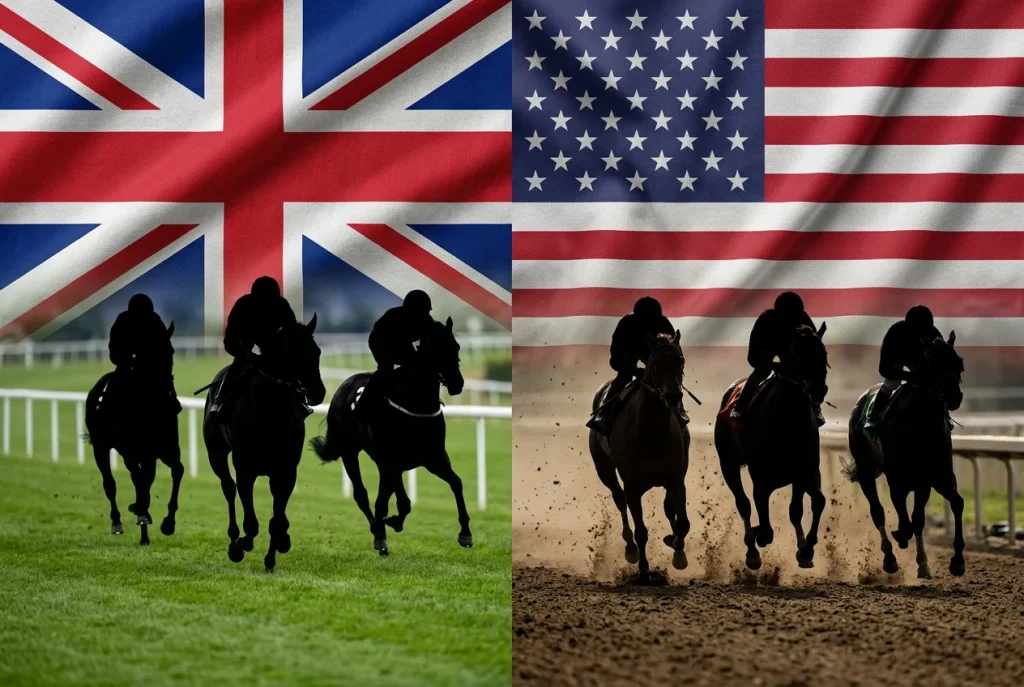
Same Bet, Different Worlds
UK vs US trifecta betting involves identical underlying concepts wrapped in different terminology and operating under different rules. Both markets require predicting the first three finishers in correct order. Both offer box structures for covering multiple horses. Yet the terminology, regulations, and practical betting experience differ enough to confuse punters moving between markets.
British racing predominantly uses “tricast” for the fixed-odds version calculated from starting prices and “trifecta” for the pool-based version. American racing uses “trifecta” almost exclusively, with pool betting the standard format at tracks nationwide.
Understanding these differences matters for punters who bet internationally or who consume content from both markets. The same bet under different names creates unnecessary confusion that this guide aims to resolve.
Both markets feature world-class racing with substantial betting opportunities. The Kentucky Derby, Breeders’ Cup, and major US tracks offer trifecta pools rivalling anything at Cheltenham or Royal Ascot. Cross-border betting appeals to punters seeking broader opportunities.
Same bet, different worlds. The fundamentals remain constant; only the packaging changes.
Terminology Guide
The UK market distinguishes between tricast and trifecta based on dividend calculation method rather than bet structure. A tricast uses the Computer Tricast dividend formula based on starting prices. A trifecta uses Tote pool dividends based on money wagered. Both require the same first-second-third prediction.
American usage employs “trifecta” universally. Pool betting dominates US racing, so no distinction between calculation methods is necessary. What British punters call a “Tote trifecta” aligns with standard American trifecta betting.
The exacta-forecast parallel applies similarly. Americans say “exacta” for predicting first and second. British punters use “forecast” for the Computer Straight Forecast product and may use “exacta” or “dual forecast” for the reversed version covering both orderings.
International terminology varies further. Hong Kong uses “tiercé” for trifecta equivalents. Canada historically used “triactor.” Australian racing employs “trifecta” in the American sense. These regional terms describe functionally identical bets.
Boxing terminology transfers cleanly between markets. A “box” or “boxed” bet covers all possible orderings of selected horses. “Wheeling” or “keying” describes structures where one horse is fixed to a position while others rotate. These concepts work identically regardless of which market’s terminology you use.
Minimum stake terminology differs less than you might expect. Both markets express minimums per combination. A 10p minimum in the UK and a $0.10 minimum in the US represent equivalent proportional costs, though currency conversion affects absolute comparison.
Superfecta terminology remains consistent. Both markets use “superfecta” for the first-four prediction, though UK availability is more limited than in the US where superfecta pools feature on most cards.
Rule Differences
Field size requirements create the most significant practical difference between UK and US trifecta betting. UK Computer Tricast dividends require eight or more runners with at least six starting, according to Bet365 tricast rules. US tracks typically offer trifecta betting on any race with sufficient starters, often as few as five or six horses.
This UK restriction means many British races do not qualify for tricast betting. Small-field conditions races, novice events with few runners, and any race where withdrawals reduce the field below threshold may see tricast markets unavailable. American punters face fewer such restrictions.
Pool structures differ in takeout rates and calculation methods. UK Tote pools deduct approximately 25% before distribution. US tracks vary widely, with takeouts ranging from 15% to 30% depending on the state and bet type. Lower takeouts theoretically benefit punters, though actual value depends on pool size and coverage patterns.
Carryover mechanisms operate differently. When no winning tickets exist for a US trifecta pool, the money typically carries forward to the next day’s pool or a designated carryover race. UK pools handle such scenarios through guaranteed minimum dividends or rollover arrangements that vary by operator.
Non-runner rules show similarities with local variations. Both markets generally convert tricasts/trifectas to forecasts/exactas when one selection withdraws. Multiple withdrawals typically void the bet entirely. Specific thresholds and conversion mechanisms may differ between bookmakers and tracks.
Betting windows close at different points relative to race start. US pools typically remain open until post time, with last-second betting common. UK trifecta betting may close slightly earlier, though the precise timing varies between on-course Tote windows and online platforms.
Surface considerations affect US racing more than UK. American tracks feature dirt, synthetic, and turf surfaces with horses specialising on specific types. UK racing occurs primarily on turf with all-weather tracks offering additional variety. Form translation between surfaces adds complexity to US trifecta analysis.
Practical Betting Considerations
Placing bets in each market requires understanding local conventions. UK online platforms present tricast and trifecta options separately, often requiring you to choose between Computer Tricast and Tote pool versions. US platforms default to pool betting with no alternative calculation method.
Richard Wayman, Director of Racing at the British Horseracing Authority, has noted that the horse population continues to decline and the betting environment remains challenging, with obvious implications for racing’s finances. These pressures affect both markets, though regulatory responses differ. US racing faces state-by-state variation while UK racing operates under unified BHA oversight.
Currency considerations matter for cross-border betting. Betting US races from UK accounts involves conversion fees and exchange rate exposure. Similarly, betting UK races from US platforms may incur additional costs. These friction costs can erode margins on successful bets.
Form information availability differs substantially. UK racing provides detailed form cards through the Racing Post and other publications with standardised formats. US racing uses different form notation with separate conventions for understanding past performances. Learning both systems requires dedicated study.
Time zones affect live betting opportunities. UK racing occurs during American morning hours; US racing spans UK evening times. Punters betting both markets must manage schedules accordingly, which can be tiring during extended cards in either jurisdiction.
Account access varies by jurisdiction. Some UK bookmakers accept bets on US racing; others do not. US platforms may restrict access from UK IP addresses or require specific licensing. Verify account capabilities before attempting cross-border betting.
Despite terminology and rule differences, the analytical skills transfer completely. Identifying value, constructing efficient boxes, and managing bankroll apply identically whether you call it tricast or trifecta. Master the concepts once; adapt the terminology as needed.
Major events in both markets offer premium opportunities. The Breeders’ Cup and Triple Crown races generate massive US pools. The Cheltenham Festival and Royal Ascot do the same for UK racing. These flagship events represent the best cross-border trifecta opportunities regardless of which market you call home.