
Pari-Mutuel Trifecta Explained: How Pool Betting Works
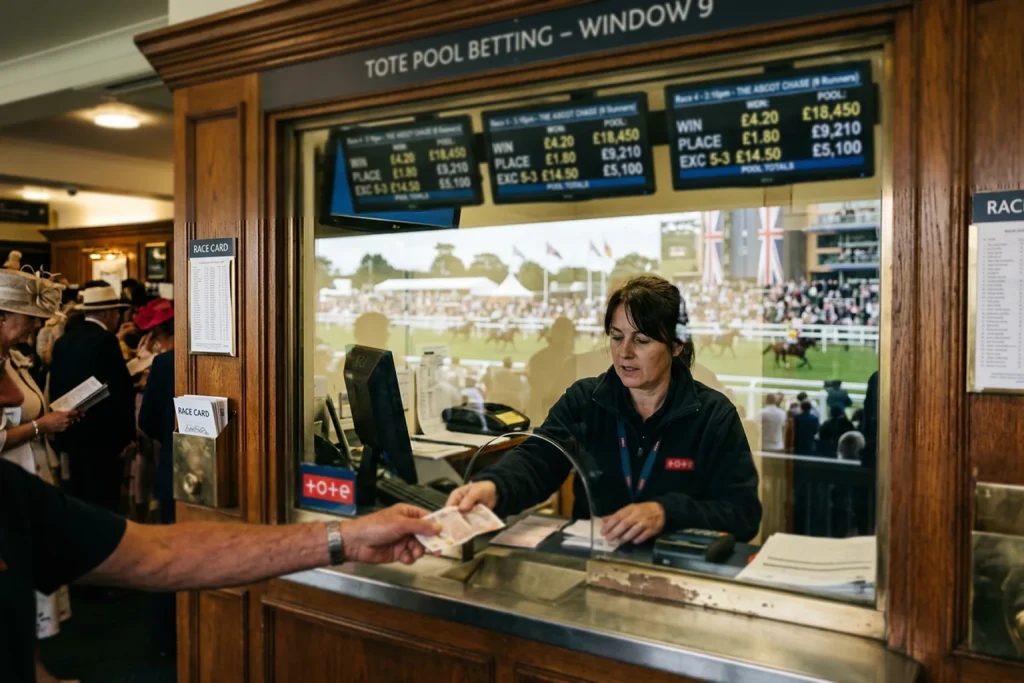
The Pool Decides
Pari-mutuel trifecta betting operates on fundamentally different principles from fixed-odds wagering. Rather than accepting a predetermined price at the time of your bet, you enter a shared pool with other punters. The dividend you receive depends on how that pool divides among winning tickets after the race concludes.
The term “pari-mutuel” derives from French, meaning “mutual wagering.” All bets on a particular outcome pool together, the operator deducts a percentage, and the remainder distributes among winners. Your return depends not just on the race result but on how other punters bet.
This system creates unique advantages and disadvantages compared to fixed-odds betting. Understanding pool mechanics helps you identify when pari-mutuel trifectas offer better value and when alternatives might serve you better.
In the UK, the Tote operates the primary pari-mutuel pool for horse racing, while bookmakers offer Computer Tricast dividends based on starting prices. Both systems have their place in a comprehensive trifecta betting approach.
The pool decides your fate in ways that skill and analysis cannot fully control. Recognising this uncertainty shapes realistic expectations about pari-mutuel trifecta outcomes.
How Pools Form
Trifecta pools aggregate all bets placed on every possible combination for a given race. The money arrives from various sources: on-course Tote windows, online accounts, telephone betting, and through bookmakers who channel bets into the Tote pool.
Pool size varies dramatically by race and meeting. A midweek handicap at a minor track might generate a trifecta pool of £5,000. The Grand National trifecta pool can exceed £1 million. Larger pools produce more stable dividends because individual bets represent smaller proportions of the total.
Before distribution to winners, the operator deducts a percentage called the “takeout” or “take.” UK Tote pools apply approximately 25% takeout on trifecta bets, according to Geegeez research. Irish pools apply approximately 30%. This difference means identical results produce different dividends in each jurisdiction.
The remaining pool after takeout represents the money available for distribution. If £10,000 enters the pool and 25% takeout applies, £7,500 remains for winning tickets. The number and size of winning tickets determines individual payouts.
Late money significantly affects pool composition. Major volumes often arrive in the final minutes before a race, particularly from professional punters who wait for optimal prices. The pool you bet into early may look very different by post time.
Pool betting creates a zero-sum environment among punters after takeout. Your winnings come directly from other bettors’ losses. This differs philosophically from fixed-odds betting where you bet against the bookmaker’s assessment rather than other punters.
International pool merging occasionally occurs for major events. Breeders’ Cup races in the US, for example, combine pools from multiple countries, creating larger total pools with more stable dividends. UK pools rarely merge internationally, maintaining independent dividend calculations.
Dividend Calculation
The basic dividend formula is straightforward: remaining pool divided by number of winning unit stakes. A £7,500 pool with 75 winning £1 tickets produces a £100 dividend. The complexity lies in how money distributed across thousands of combinations affects this calculation.
Consider a practical example. A twelve-horse race produces 1,320 possible trifecta combinations. The £10,000 pool (before 25% takeout) distributes unevenly across these combinations based on punter opinions. Popular combinations might hold £200 each while obscure ones hold £5 or nothing.
When an unlikely combination wins, fewer tickets hold the result. If only £50 was bet on the winning combination across all tickets, the £7,500 remaining pool divides among those £50 in wagers. Each £1 stake receives £150 (7,500 ÷ 50).
Research found that trifecta dividends averaged 26% higher than Computer Tricast dividends across 1,011 UK handicap races. This premium reflects situations where the pool-based calculation outperformed the fixed formula. However, individual races vary; sometimes tricast pays more.
Minimum dividend guarantees apply in some jurisdictions. If mathematical calculation would produce a dividend below a threshold, the operator may guarantee a minimum return. UK Tote pools typically guarantee at least £1 return per winning ticket, preventing scenarios where excessive coverage produces trivial payouts.
The dividend calculation means your payout depends partly on other punters’ behaviour. If a popular tipster recommends your combination, thousands might pile onto the same ticket, diluting your potential dividend even if you were there first. Conversely, having coverage on overlooked runners can produce premium returns.
Indicative dividends displayed before races provide rough guidance but can shift dramatically with late money. Treat these figures as directional indicators rather than guaranteed outcomes. The final dividend often differs substantially from pre-race estimates.
Pros and Cons of Pool Betting
Pool betting advantages centre on potential for exceptional returns. When unusual results occur with minimal coverage, dividends can reach levels impossible under fixed-odds systems. The Royal Ascot record trifecta of £122,667.10 illustrates this ceiling.
Transparency represents another advantage. The pool total is visible, and the calculation method is known. You can estimate dividend ranges before the race based on indicative pools, though final numbers may shift with late money.
No individual bookmaker exposure exists. In fixed-odds betting, bookmakers can limit or close winning accounts. Pool betting treats all participants equally; your success does not create a relationship problem with an operator.
Disadvantages begin with uncertainty. You cannot know your exact payout until after the race concludes and the pool finalises. Stakes committed at different times earn identical dividends, meaning early bettors have no information advantage despite committing capital earlier.
The takeout percentage guarantees the operator’s margin regardless of results. A 25% takeout means the pool returns only 75p of every £1 wagered. Over time, this extraction erodes bettor capital unless offset by superior selection.
Popular selections pay poorly under pool systems. When everyone backs the favourite, money concentrates on those combinations. A winning favourite produces compressed dividends because the pool divides among many tickets. The crowd’s wisdom, when correct, benefits no individual substantially.
Thin pools produce erratic dividends. At minor meetings with small trifecta pools, a single large bet can dramatically shift distributions. The same combination might pay £200 at one track and £80 at another depending entirely on pool composition rather than race quality.
Major meetings offer the best pool conditions. Cheltenham Festival, Royal Ascot, and Grand National day generate deep pools where individual bets barely affect overall distribution. These events provide the most reliable pari-mutuel trifecta experience.
Strategic punters use pool betting selectively. Target races with substantial pools and identifiable value combinations. Avoid thin pools where randomness dominates, and consider Computer Tricast alternatives when pool conditions seem unfavourable.
The choice between pool and fixed-odds ultimately depends on your betting goals and the specific race conditions you encounter. Neither system dominates universally; each suits different situations.