
Trifecta Dead Heat Rules: How Tied Finishes Affect Your Bet
When They Cannot Be Split
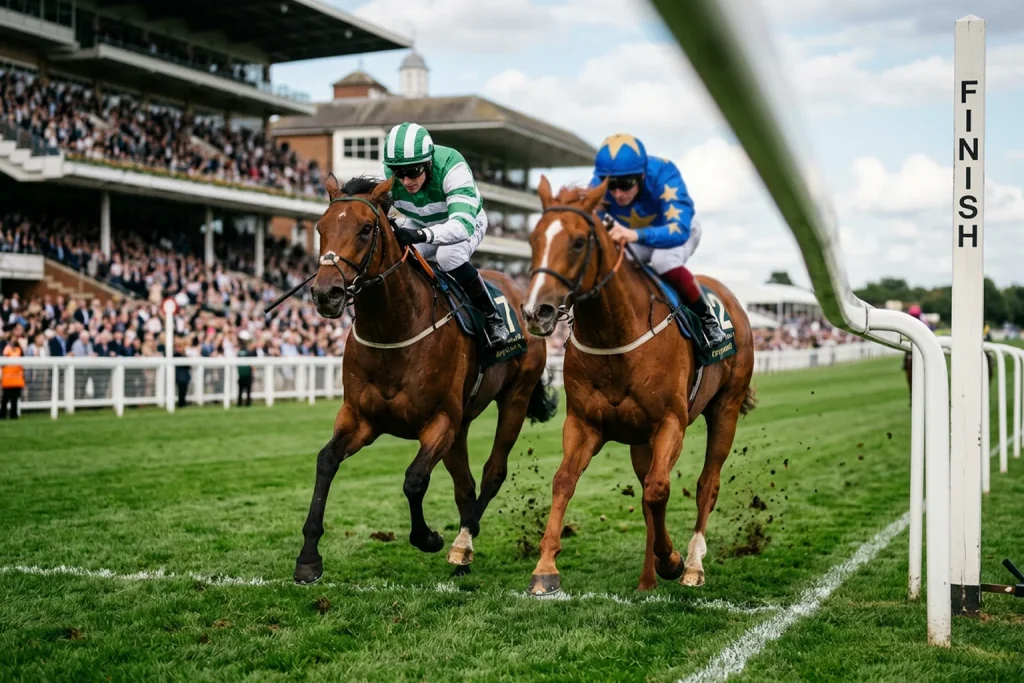
Dead heat rules in trifecta betting address the rare scenario where two or more horses finish in positions that the photo finish camera cannot separate. When a dead heat occurs in any of the first three positions, the standard trifecta calculation transforms into something more complex, potentially creating multiple winning combinations where only one would normally exist.
Dead heats occur infrequently in modern racing. Photo finish technology accurately separates horses to the nearest thousandth of a second, resolving most apparently close finishes definitively. However, when horses genuinely cross the line simultaneously, the rules must accommodate shared positions and their effects on exotic bet settlements.
Understanding dead heat implications before they occur prevents confusion and disappointment. The dividend calculations that follow a dead heat differ substantially from standard settlements, affecting both how much winning tickets receive and which tickets qualify as winners at all.
British racing judges have the authority to declare dead heats when they cannot separate runners using available technology. The decision is final, and betting settlements follow established procedures regardless of how close the margin appeared to spectators.
When they cannot be split, the rules take over. Knowing how these rules work ensures you can assess your position accurately when unusual circumstances arise.
How Dead Heats Affect Trifecta Outcomes
A dead heat for any of the first three positions multiplies the number of winning trifecta combinations. If two horses dead heat for first place, both are treated as joint winners. This creates two distinct winning combinations for what would normally be a single first-place outcome. Research analysing 1,011 UK and Irish races specifically excluded dead heat races because payouts get split and calculations become complex, demonstrating how dead heats fundamentally alter trifecta mathematics.
Consider a race where horses A and B dead heat for first, with horse C finishing third. The official result records both A and B as first-place finishers, with no horse officially second. Horse C becomes third. The winning trifecta combinations become A-B-C and B-A-C, both paying out to holders.
Dead heats for second position work similarly. If the winner is clear but two horses cannot be separated for second, both are recorded as joint second, with the fourth-placed horse becoming third for trifecta purposes. Again, two winning combinations emerge from what would otherwise be one.
Third-position dead heats create the most complex scenario for trifectas. Two horses sharing third means both complete valid trifecta combinations. A clear first and second, with C and D dead heating for third, produces winning combinations of 1-2-C and 1-2-D.
Dead heats occur approximately 20-25 times annually across thousands of UK flat and National Hunt races, making them genuinely rare events. While infrequent, this means a regular trifecta bettor will still encounter dead heat scenarios over the course of several racing seasons. The rules may seem abstract until you hold a ticket affected by one.
Multiple dead heats in the same race, while extremely rare, compound these effects further. A dead heat for first and another for third would produce four winning combinations, splitting the pool four ways among qualifying tickets.
Dividend Calculation Examples
Dead heat dividend calculations follow a specific methodology that divides the pool according to how positions are shared. The principle involves treating each dead-heated horse as having won that position, then distributing the pool among all resulting winning combinations.
Consider a practical example with a £10,000 trifecta pool after takeout deductions. In a standard result with clear first, second, and third finishes, if 100 winning tickets exist at £1 each, each ticket receives £100 (pool divided by winning tickets).
Now imagine the same pool with a dead heat for first place between horses A and B, with horse C third. Two winning combinations exist: A-B-C and B-A-C. If 60 tickets hold A-B-C and 40 tickets hold B-A-C, the pool splits proportionally. Each A-B-C ticket receives £10,000 ÷ 100 = £100. The dead heat has not affected the per-ticket dividend because the same total tickets win.
However, dead heats often result in fewer total winning tickets across all combinations than a single result would produce. If A alone had won with B second and C third, perhaps 80 tickets would win. The dead heat creating two combinations might see only 60 + 25 = 85 tickets across both outcomes, meaning individual dividends could actually increase slightly.
Conversely, a dead heat might bring more tickets into winning positions. If the dead heat involves a long shot that few punters backed, suddenly their tickets qualify as winners, diluting the pool further. The net effect depends entirely on how money was distributed across the various possible combinations.
Bookmakers calculate Computer Tricast dividends for dead heats using a modified formula that accounts for the shared position. According to William Hill’s tricast rules, if there is a dead heat for first, second, or third place, a separate dividend will be declared for each winning tricast combination. The starting prices of dead-heated horses are both factored into the dividend calculation, typically producing a lower individual dividend than either horse winning outright would generate.
For pool-based trifectas through the Tote, the calculation simply divides the pool among all qualifying combinations. The Tote does not apply any special adjustment beyond recognising which combinations win under the dead heat scenario.
Box Bet Implications
Trifecta box bets potentially benefit from dead heats more than straight combinations. A box covering multiple horses may find that a dead heat brings one of its combinations into winning position when a clear result might not have.
Consider a four-horse box covering A, B, C, and D. If A wins clearly with B second and C third, one of your 24 combinations pays out. But if B and C dead heat for second, with D third, your box now contains two winning combinations: A-B-D and A-C-D. Your single box bet produces two winning payouts.
This potential upside comes with corresponding downside. If the dead heat involves horses outside your box, you gain nothing. And if the dead heat brings additional winning tickets into play, your dividend per winning combination may decrease. The box provides exposure to dead heat benefits but not guaranteed advantage.
Partial coverage bets like key boxes face specific dead heat considerations. If your keyed horse dead heats for first position, your bet might win on combinations you did not anticipate. Alternatively, if the dead heat pushes your keyed horse out of its required position, your bet might lose despite appearing close to success.
Dead heat rules do not change box costs or combination counts. They only affect outcomes when dead heats occur. Your pre-race calculation remains valid; only the post-race settlement may differ from standard expectations.
When encountering a dead heat, verify your ticket coverage against both resulting combinations. You may have more winning positions than initially apparent, or the dead heat may have cost you a payout you thought was secure.
Major bookmakers publish dead heat rules in their terms and conditions. Reviewing these before placing substantial trifecta bets ensures you understand exactly how your chosen platform handles these unusual but consequential scenarios.